
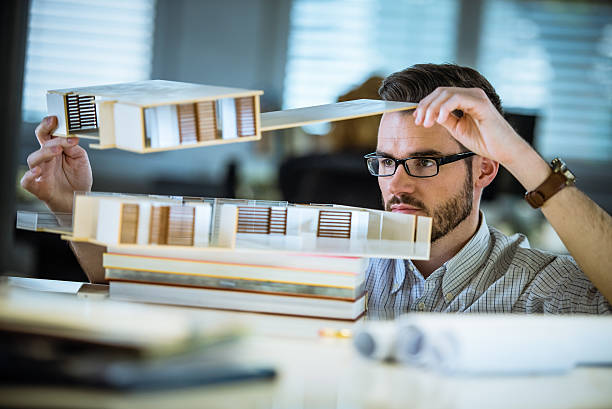
Walk into any serious sales office, museum or design school in India and you’ll probably notice one thing sitting in the middle of the room: a model. It might be a glowing residential tower, a miniature temple complex or a cutaway of an industrial plant. People gather around it without being asked. They point, lean in and start discussing. No slide deck gets that kind of reaction.
That’s the quiet power of a physical object. It lets people understand an idea in seconds rather than minutes. Many organisations now work with a model making company india because they’ve learned that a good model saves time in meetings, reduces confusion and makes decisions easier. Here’s a look at how different sectors use models and why the habit keeps growing even as digital tools improve.
Why Humans Trust What They Can Touch
There’s a simple reason models work. We understand space with our bodies. When you see a flat render, your brain has to translate it into depth, scale and distance. With a model, that work is already done. You can see how tall one block is compared with the next, how a courtyard opens up, where the shadows fall in the afternoon.
This matters most for people who don’t read drawings for a living. A buyer, a village panchayat member, a school trustee or a government officer may struggle with plans but will grasp a model immediately. For anyone trying to explain a project to a mixed audience, that’s a big advantage.
Real Estate and Township Projects
Property is the most visible user of models in the country. Developers place them in sales galleries because buyers want to see the whole layout: where the clubhouse sits, how far the gate is from their tower, how much green space is actually planned. A brochure can promise all this, but a model lets people check for themselves.
Models also help sales teams. A salesperson with a model in front of them can walk through a project calmly and answer questions without flipping between ten different drawings. Many developers say that customers stay longer and ask better questions when a model is present, which usually leads to more serious conversations.
Government, Planning and Public Projects
Large public projects involve people from many departments, and most of them have limited time. A model of a metro station, a bridge or a riverfront plan can bring everyone to the same understanding quickly. It also helps when presenting to communities who will be affected by a project, because it removes the feeling that something is being hidden in technical language.
Urban planners use site models to study how a new building will sit among existing ones. Seeing height, bulk and neighbouring structures together makes it far easier to spot problems such as blocked light or awkward road junctions before approvals are given.
Education and Research
Architecture and design colleges depend on models to teach students how to think in three dimensions. Study models, structural models and detailed final presentations all form part of the course. Schools also use working models in science and history, from water systems to ancient forts, because children remember what they’ve seen and handled.
Universities and research institutes sometimes commission models to demonstrate complicated concepts, such as how a machine works or how a river basin behaves. Choosing a model making company india with experience in educational work can help, since accuracy and durability are both important when many hands will touch the piece.
Museums, Heritage and Culture
India has an enormous amount of heritage, and much of it can’t be visited easily or no longer exists in its original form. Models bring these places back. A museum can show a lost fort, an old trading town or a cave temple in a way that photos can’t. Visitors walk around the piece, notice details and often leave with a better sense of scale than any caption could give.
Heritage conservation teams also use models to plan restoration. Testing a repair idea on a small copy is cheaper and safer than experimenting on a monument.
Industry, Infrastructure and Product Display
Factories, ports, power plants and mines are difficult to visit and even harder to explain. A scaled model of a plant lets visitors, investors and trainees understand how materials move through the site. Safety training also benefits because staff can see where hazards might occur.
In product design, models and prototypes help teams test ideas before spending money on production tools. A hand-held mock-up often reveals problems that a screen design hides, such as an awkward grip or a button in the wrong spot.
Digital Tools Haven’t Replaced Models
Some people expected virtual reality and animation to make models obsolete. That hasn’t happened, and there are good reasons. A headset needs setup, training and a willing user. A model needs only a table and a light. It works for ten people at once, and nobody feels dizzy.
In practice the two methods work together. Many studios now build the digital version first, then use it to cut, print and plan the physical piece. The result is faster and more accurate than either approach alone, and the client gets to enjoy both.
What a Good Maker Brings to the Table
Skill with tools is only part of it. A strong team understands architecture, materials, light and storytelling. They know how to simplify a building so the main idea stands out, which details deserve attention and which can be left out. They also know how people look at models: from above first, then closer, then from the side. Good design takes that into account.
Reliability matters as much as craft. Deadlines for launches, exhibitions and inspections are fixed, so a maker who delivers on time and communicates honestly is worth a lot more than one who produces beautiful work late.
Getting Started With Your First Model
If you’re new to commissioning one, begin with a clear purpose and a realistic budget. Share your drawings, tell the maker who’ll be viewing the model and ask for suggestions. Expect a few rounds of discussion before the final scope is set, and expect to review progress along the way.
Keep your expectations grounded. A model reflects the information it’s built from, so complete and accurate drawings make a real difference. The earlier you share them, the smoother things tend to go.
Hospitality, Retail and Commercial Spaces
Hotels, resorts and malls use models long before the first brick is laid. Investors want to see how guest rooms, pools and walkways connect, and operators want to check whether the layout will actually work for staff moving around all day. A model of a resort set against its real terrain, with the hills, the water and the approach road, tells a story that a floor plan never will.
Retail brands use smaller versions for store concepts. A shop interior built at a modest scale lets the design team test shelf heights, lighting and customer flow, then fix them while changes are still cheap. It’s a habit more brands are picking up, especially those rolling out the same format across many cities.
Timing: When to Order a Model
Many people leave this too late. A model ordered a week before a launch usually means rushed finishing and nobody having time to check details. The better habit is to start once the design is stable enough that big changes aren’t expected. That might be after concept approval for a presentation model, or after the final drawings for a sales model.
Early study models are different. They can be made quickly, in plain white material, to test massing and proportion while the design is still moving. Some teams build three or four of these during a project. They cost little and often prevent expensive mistakes later.
Common Mistakes First-Time Buyers Make
A few errors show up again and again. Asking for too much detail at too small a scale, so the model turns fussy and hard to read. Changing the design halfway through without telling the maker. Forgetting to plan the display location, then discovering the finished model won’t fit through the door. And choosing purely on price, then being surprised by rough finishing.
None of these is hard to avoid. Talk early, decide the essentials in writing and keep the maker updated on any design change, however small it seems.
A Quick Checklist Before You Begin
Write down the purpose, audience and display location. Collect your latest drawings. Fix a realistic budget and a deadline with some spare days built in. Then shortlist two or three studios and send each the same brief. Comparing their replies side by side is the easiest way to see who understood your project.
Closing Thoughts
Physical models have lasted because they do something simple very well: they make ideas believable. Whether you’re selling apartments, teaching students, presenting to a committee or protecting heritage, a model gives people a shared picture to talk about.
The right partner turns that picture into something people remember. If you’re weighing options, look for a model making company india that listens first, asks sensible questions and shows past work you can verify. Do that, and your next presentation won’t need a lot of explaining. People will look at the model, nod and say, “Okay, I see it.”